
Ballet Classes
Ballet Dancing is...
a classical dance form known for its discipline, elegance, precision, and highly developed technique. As ballet remains an important foundation for most other dance styles all the pupils of Dancetec Academy study the ballet grades with a view to taking examinations with the International Dance Teachers’ Association.
Ballet originated in the courts of Renaissance Italy and later developed in France and Russia, where its vocabulary, training methods, and theatrical traditions became more formalised. Many ballet terms are French, reflecting the influence of the French court and the early academies that helped codify the art form.
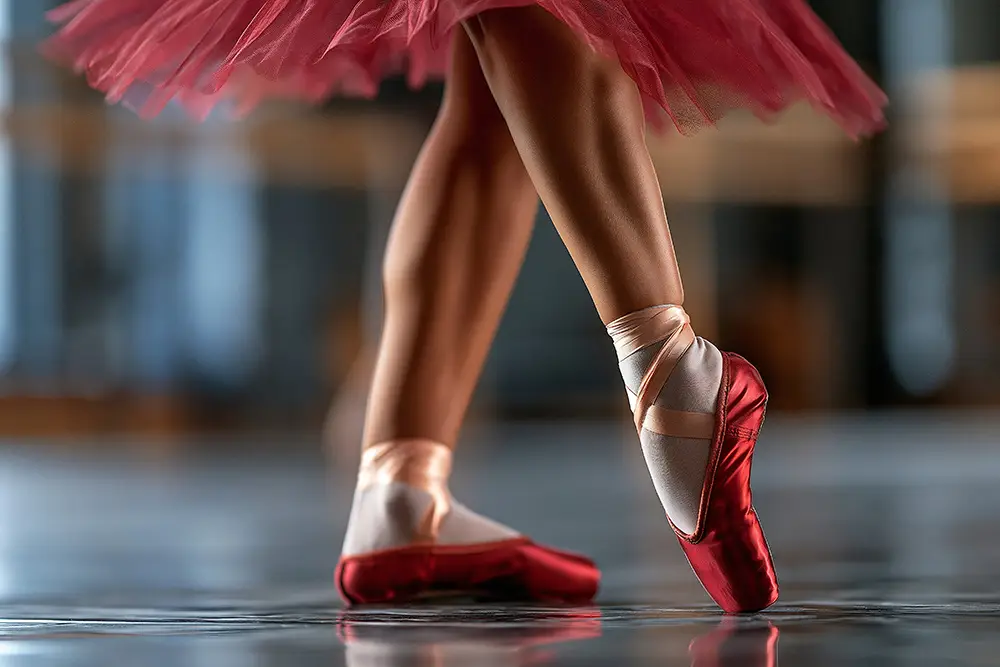
Developing Strength, Grace and Control
“Turnout” is essential to ballet technique. It is not something we have, it is a “movement” we make.
We train the muscles to turn out from the hips, knees and feet. Turnout is aesthetically pleasing for the audience and helps the dancer’s stability and therefore the dancer’s safety.
Ballet training usually begins at the barre, where dancers practise exercises that build alignment, turnout, strength, balance, and control. Movements such as pliés, tendus, dégagés, ronds de jambe, and relevés prepare the body for the centre work that follows. In the centre, dancers develop coordination, turns, jumps, travelling steps, and expressive qualities without the support of the barre.
Although ballet can appear effortless on stage, it requires considerable strength and stamina. Dancers must maintain lifted posture, controlled arm positions, articulate footwork, and clear lines while also communicating mood, character, or story.
There are multiple things for the dancer to master. But it is reassuring that even the best dancers make mistakes sometimes – they just learn how to carry them off with grace and style!